The great misunderstanding: AI as a tool
When companies talk about AI adoption, they usually mean tool deployment. A copilot here, an automation workflow there. The implicit assumption: the organization stays as it is – only a few processes run faster.
This assumption is the central obstacle on the path to real competitiveness. Not because AI tools are bad, but because technology alone does not improve decision quality, generate learning capability or build organizational resilience. Only organizational structures in which humans and AI act as an integrated system can do that.
The difference is fundamental: a tool extends the hand. A hybrid operating system changes how decisions are made, how knowledge is distributed and how adaptation processes are triggered. Organizations that fail to grasp this difference keep investing in technology – and keep wondering why impact remains elusive.
According to McKinsey (2024), fewer than one third of all companies manage to realize the expected value from AI initiatives. The most common reason: the organization itself was not transformed.
What a hybrid organization really means
The term 'hybrid' is already loaded in many companies – with remote-work models, multi-channel strategies or mixed sales approaches. That is not what is meant here.
A hybrid organization in the sense used here is one in which humans and AI are structurally aligned so that they reinforce each other: AI handles pattern recognition, information condensation and scenario modelling. Humans contribute judgement, contextual knowledge, accountability and relationship-building.
Hybrid organizations don't emerge when people and AI tools share an office. They emerge when both are structurally linked so that neither functions optimally without the other.
This requires no deep technical expertise from everyone involved. It requires an organizational decision: which tasks are handled by AI, which by humans – and above all: which only emerge in the interplay of the two?
The four levels of hybrid organizational design
Resilience Bakery has developed a framework that thinks about hybrid organizations along four building levels. Each level is necessary – but none alone is sufficient.
- Level 1 – Tasks & roles: which tasks does AI take over automatically, which does it support, which remain exclusively human?
- Level 2 – Decision paths: how does AI-generated information feed into decisions? Who validates, who is accountable, who escalates?
- Level 3 – Learning & feedback loops: how does the system learn from decisions? How are insights from AI output translated into process improvements?
- Level 4 – Governance & guardrails: which rules apply to AI usage? Where are the no-go zones? Who monitors compliance – preventively and detectively?
Level 1: Rethinking tasks and roles
The first step is the most honest exercise an organization can perform: a systematic analysis of which tasks are done by humans today – and why. Not every task humans perform should stay with humans. And not every task in which AI is efficient should be fully handed over to it.
Routine information processing, summaries, first drafts, anomaly detection in data, contract review against fixed criteria – these are natural AI domains. Stakeholder management, culture work, ethical trade-offs, negotiation, creative strategy – these are human strengths that AI can complement but not replace.
The truly value-creating zone is the middle: tasks that only reach their full impact through the interplay of both. A risk manager who combines AI-generated scenarios with customer experience makes better decisions than AI or humans alone.

Level 2: Structuring decision paths
The most common false assumption in AI integration: if the AI makes a recommendation, it's probably right. The opposite is the correct stance. AI outputs are inputs for human decisions – not a replacement.
This requires explicit decision architecture: how is an AI output made visible? Who reads it under which conditions? Which validation steps are mandatory? Who bears responsibility for the final decision? These questions must be answered – not by the IT department but by leadership.
The self-learning system: autopoiesis as an organizational principle
Sociologist Niklas Luhmann described organizations as autopoietic systems: systems that continuously reproduce and develop themselves through their own operational logic. They generate from within the very elements they consist of.
What was once a sociological theory now describes a concrete organizational ideal: a company that learns without external impulse. Not because leadership orders it, but because structures are designed so that learning is the natural consequence of working.
An organization that is truly resilient needs no external impulse to adapt. It registers changes in its environment, processes them internally and generates new capacity to act from them – continuously, structurally anchored.
In the hybrid organization this translates as follows: AI systems register deviations, patterns and anomalies in real time. Humans interpret these signals in the light of their experience and contextual knowledge. From this emerge adjustments in processes, roles or priorities – which in turn generate new data that lets the system learn again.
Anchoring learning loops architecturally
The decisive difference between a learning and a stagnating company is not intelligence or willpower. It is architecture. Learning organizations have structures that generate feedback automatically, make it visible and translate it into improvement impulses.
Concretely: review cycles that are not optional. KPI systems that measure not only results but pose learning questions. Leadership conversations grounded in data, not gut feeling. And AI systems that act as an early-warning function – not as a control instance, but as organizational memory.
The early-warning system as an interface
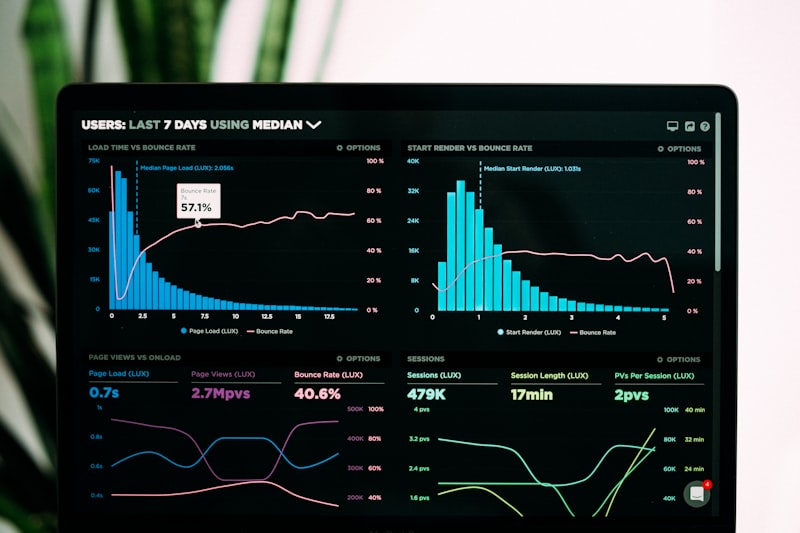
In Resilience Bakery's Path to Resilience model the early-warning system is the sixth and decisive phase: detecting changes early before they become crises. In hybrid organizations this early-warning system is not a separate function – it is built into the working day.
AI-powered monitoring systems continuously observe signals: in process data, customer feedback, market movements, internal quality indicators. Humans decide which signals are relevant – and how to respond. This loop is the core of autopoietic organizational logic.
The most common mistakes when introducing hybrid structures
- Roles are not redefined. AI is introduced, but no one clarifies what leaders and employees should do instead.
- Decision accountability remains unclear. If the AI makes a recommendation and it is wrong – who carries it? Without an explicit answer, paralysis follows.
- Leadership is not prepared. Managers who cannot read AI output pass it on unreflected or ignore it – both are dangerous.
- Compliance is treated as an afterthought. If governance is designed only after something goes wrong, the damage is already done.
- Learning loops exist only on paper. Retrospectives are agreed but not observed. The system does not learn.
The Resilience Bakery approach: hybrid organization as a strategic project
Resilience Bakery supports companies in thinking about hybrid organizational models not as a project but as a strategic operating system. This does not start with technology selection but with a diagnosis: where does the organization stand today? What are the biggest friction points? Where would hybrid collaboration have the strongest lever?
Building on that, we work with leadership teams to develop a path that clarifies roles, designs decision architectures, anchors governance and structurally embeds learning mechanisms – step by step, measurable and scalable.
The goal is not a perfect hybrid organization. The goal is an organization that becomes better – continuously, from within itself, under real conditions.
How hybrid is your organization really?
The Resilience Check gives you a well-founded diagnosis of your human-AI structures, decision paths and organizational learning capability – data-based, concrete, without buzzwords.
Start the Resilience Check (approx. 3 min)